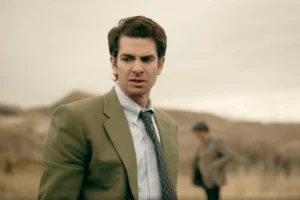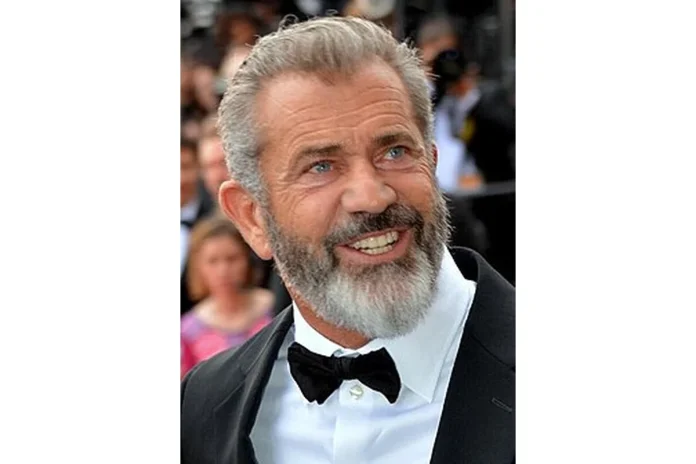
Mel Gibson Bio
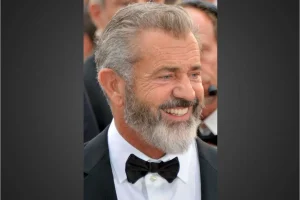
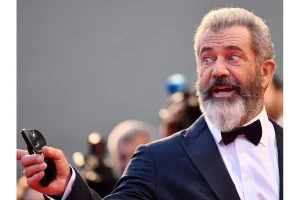
Mel Colm-Cille Gerard Gibson, born on January 3, 1956, in Peekskill, New York, is an American actor and filmmaker whose career has spanned more than four decades across continents. He first rose to international prominence through his portrayal of Max Rockatansky in the original Mad Max trilogy and later cemented his status as a Hollywood leading man with the Lethal Weapon series. Beyond acting, Gibson has built a reputation as a director of large-scale historical and biblical dramas, including Braveheart, The Passion of the Christ, Apocalypto, and Hacksaw Ridge.
Born in the United States and raised in Australia after his family relocated when he was twelve, Gibson trained as a stage actor before transitioning to film. His work as both performer and filmmaker has earned him two Academy Awards for directing and producing, along with a Golden Globe Award for Best Director. Over the course of his career, films either starring or directed by Mel Gibson have earned more than two and a half billion dollars at the United States box office alone.
Early Life and Background
Mel Gibson was born in Peekskill, New York, and grew up in a large Catholic household as the sixth of eleven children of Hutton Gibson and Ann Patricia Reilly. When he was twelve years old, his family moved to Sydney, Australia, where he completed his secondary education at St Leo’s Catholic College in New South Wales. His American upbringing and Irish heritage through his mother have given him dual Irish and American citizenship, while his long residence in Australia has made him an Australian permanent resident.
During his teenage years, Gibson developed an interest in performance and participated in school theatrical productions. His early exposure to storytelling came largely through his family environment and the cultural blend of his American and Australian surroundings. These formative experiences laid the groundwork for his later decision to pursue acting professionally.
After high school, Gibson enrolled at the National Institute of Dramatic Art in Sydney, one of Australia’s most respected training institutions for actors. While a student at NIDA, he starred opposite Judy Davis in a production of Romeo and Juliet and played Queen Titania in an experimental staging of A Midsummer Night’s Dream. He graduated from the program in 1977, prepared to begin his professional screen career.
Path to Celebrity
Gibson made his film debut while still a student at NIDA, appearing in the 1977 Australian film Summer City for a fee of four hundred dollars. The following year, he was cast as the title character in Mad Max, a low-budget post-apocalyptic action film directed by George Miller. Released in 1979, Mad Max became a surprise international hit and established Gibson as a compelling screen presence.
While filming early projects, Gibson continued to work on the stage, joining the State Theatre Company of South Australia in Adelaide. His theatrical credits during this period included the role of Estragon in Waiting for Godot opposite Geoffrey Rush and the part of Biff Loman in a 1982 Sydney production of Death of a Salesman. These stage experiences sharpened his craft and helped him transition from student roles to mature professional performances.
The turning point in Gibson’s early career came when director Peter Weir cast him as one of the leads in the World War I drama Gallipoli, released in 1981. His performance earned him a Best Actor Award from the Australian Film Institute and attracted the attention of Hollywood agents. Following the success of Mad Max 2 in 1982 and the romantic thriller The Year of Living Dangerously, also released in 1982, Gibson had firmly positioned himself for a full transition into American feature films.
Mel Gibson Career
Early Career (1976–1986)
Mel Gibson’s professional acting career began in 1976 with a guest role on the Australian television series The Sullivans. He followed that appearance with his film debut in Summer City and then took on the title role in Mad Max, which became a major commercial success. He also appeared in the film Tim in 1979 and guest-starred on Australian series including Cop Shop before landing his pivotal role in Gallipoli.
During this period, Gibson earned several recognitions from the Australian Film Institute for his performances in Mad Max and Gallipoli. He built his reputation across Australian television, stage, and film before relocating his focus to Hollywood projects. By the time he took on the role of Fletcher Christian in The Bounty in 1984 and earned his first million-dollar salary for Mad Max Beyond Thunderdome in 1985, Gibson had become one of Australia’s most recognized exports to international cinema.
Breakthrough (1987–2002)
Gibson’s Hollywood breakthrough came with the 1987 action film Lethal Weapon, in which he played the reckless detective Martin Riggs opposite Danny Glover. The film cemented his reputation as a leading man and launched one of the most successful buddy-cop franchises of the era. He went on to appear in Lethal Weapon 2 in 1989, Lethal Weapon 3 in 1992, and Lethal Weapon 4 in 1998, each reinforcing his box-office appeal.
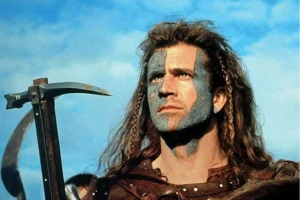
In 1995, Gibson expanded his career by directing, producing, and starring in the historical epic Braveheart. His portrayal of the Scottish warrior William Wallace, combined with his work behind the camera, earned him the Academy Award for Best Director and the Academy Award for Best Picture, along with the Golden Globe Award for Best Director. He later starred in Ransom, Payback, What Women Want, and The Patriot, the latter of which earned him a record twenty-five-million-dollar salary.
Gibson continued to take on high-profile roles into the early 2000s, including the Vietnam War drama We Were Soldiers and M. Night Shyamalan’s Signs, which became the highest-grossing film of his acting career. He also voiced John Smith in Disney’s animated film Pocahontas. This era marked the height of his popularity as both an actor and an emerging filmmaker.
Later Directing Career (2004–Present)
In 2004, Gibson directed and co-wrote The Passion of the Christ, a biblical drama that became the highest-grossing rated R film at the time of its release. He followed that success with Apocalypto in 2006, an action-adventure film set in Mesoamerica featuring dialogue in the Yucatec Maya language. After a ten-year absence from directing, he returned with Hacksaw Ridge in 2016, a World War II drama based on the true story of conscientious objector Desmond T. Doss, which earned six Academy Award nominations and won two Oscars.
In 2025, Gibson released Flight Risk, a thriller he directed for Lionsgate starring Mark Wahlberg. He continues to develop new projects, including a planned sequel to The Passion of the Christ and a remake of The Wild Bunch. He has also expressed interest in directing a Viking-era project originally planned to star Leonardo DiCaprio, though DiCaprio later departed the project.
Notable Works and Milestones
Among Gibson’s most recognized works are the Mad Max and Lethal Weapon film series, which defined his image as an action star during the 1980s and 1990s. His transition to directing produced some of the most discussed films of his generation, including Braveheart, The Passion of the Christ, Apocalypto, and Hacksaw Ridge. Films either starring or directed by Mel Gibson have collectively earned more than two and a half billion dollars in the United States alone, a testament to his enduring commercial impact.
Mel Gibson Award Nominations
Mel Gibson has received numerous award nominations across his career as both an actor and a filmmaker. His directorial work on Hacksaw Ridge in 2016 earned him nominations for the Academy Award for Best Director and the Golden Globe Award for Best Director. Earlier in his career, his performance in Gallipoli brought him a Best Actor Award nomination from the Australian Film Institute, helping to launch his international profile.
Mel Gibson Awards Won
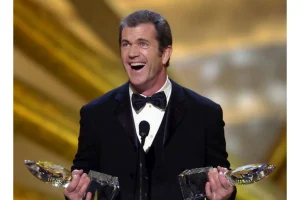
Gibson has accumulated a series of major accolades for both his acting and his directorial work. He won the Academy Award for Best Director and the Academy Award for Best Picture for Braveheart in 1996, in addition to the Golden Globe Award for Best Director for the same film. For Hacksaw Ridge, he won two Academy Awards in 2017, recognizing achievements in sound mixing and film editing for the production. He also earned the Australian Film Institute Award for Best Actor for his performance in Gallipoli.
| Award | Wins | Year |
|---|---|---|
| Academy Award for Best Director | 1 | 1996 |
| Academy Award for Best Picture | 1 | 1996 |
| Golden Globe Award for Best Director | 1 | 1996 |
| Academy Award for Best Sound Mixing | 1 | 2017 |
| Academy Award for Best Film Editing | 1 | 2017 |
| Australian Film Institute Award for Best Actor | 1 | 1981 |
Mel Gibson Family
Mel Gibson was born into a large family as the sixth of eleven children of Hutton Gibson and Ann Patricia Reilly. His father, Hutton Gibson, was a railroad brakeman who later became known for his conservative Catholic views. Through his mother, Gibson holds Irish heritage, which has given him dual Irish and American citizenship alongside his Australian permanent residency.
Gibson has nine children from his marriage and subsequent relationships. With his former wife Robyn Moore, he has one daughter, Hannah, and six sons: twins Edward and Christian, William, Louis, Milo, and Thomas. He also has a daughter, Lucia, with musician Oksana Grigorieva, and a son, Lars Gerard, with writer Rosalind Ross. As of 2024, he is a grandfather to seven grandchildren.
Personal Life
Gibson married Robyn Moore in 1980 in a Catholic church in Forestville, New South Wales, after meeting her in Adelaide while working with the South Australian Theatre Company. The couple separated in 2006, and their divorce was finalized in December 2011, resulting in a settlement reported to be the largest in Hollywood history at over four hundred million dollars. Following his divorce, Gibson had a high-profile relationship with Oksana Grigorieva from 2007 to 2010, which ended amid legal disputes, and later began a relationship with Rosalind Ross in 2014.
Beyond his film work, Gibson is a noted property investor with real estate holdings in Malibu, Costa Rica, Fiji, and Australia. He has also been involved in philanthropy, donating millions to charities supporting children in need, the restoration of Renaissance artwork, the National Institute of Dramatic Art, and environmental conservation efforts in Central America. He has been open about his struggles with alcoholism and has spoken publicly about the perspective that charitable work has given him throughout his recovery.