Richard Dreyfuss Bio
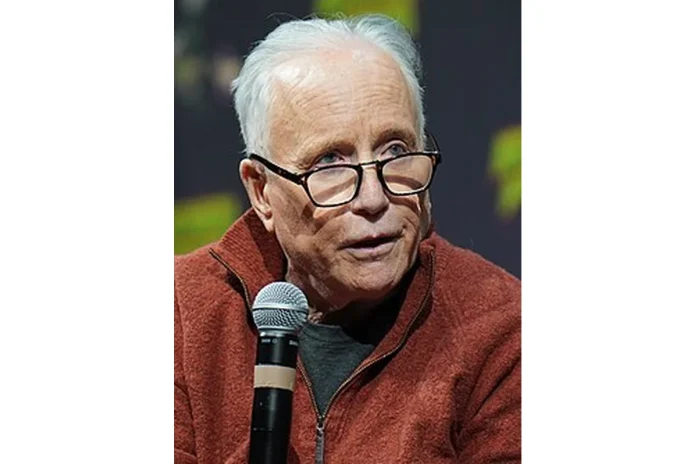
Richard Stephen Dreyfuss (born October 29, 1947) is an American actor and producer who became one of the defining stars of the New Hollywood era of American cinema during the 1970s. He rose to fame with leading roles in American Graffiti (1973), Jaws (1975), and Close Encounters of the Third Kind (1977), establishing himself as a dependable and versatile leading man. Dreyfuss has earned an Academy Award, a BAFTA, and a Golden Globe, and he was a second-time Oscar nominee for his work in Mr. Holland’s Opus (1995). Across his long career, he has also worked as a producer and has remained active in film, television, and stage.
Early Life and Background
Richard Stephen Dreyfuss was born on October 29, 1947, in Brooklyn, New York City, the second and younger son of Norman Dreyfuss, an attorney, restaurateur, and plastics company owner, and Geraldine Robbins, a peace activist. He has an older brother, Lorin, who became an actor, producer, and screenwriter, and a younger sister, Cathy. His father, a U.S. Army veteran who suffered lasting physical effects from a mortar explosion at the Battle of the Bulge in World War II, eventually left the family when Richard was an adult.
Dreyfuss was raised in the Bayside area of Queens in a Jewish family with roots tracing to immigrants from Russia and Poland. His father disliked New York, and the family first moved to Europe and later to Los Angeles when Dreyfuss was nine years old. He attended Beverly Hills High School, completing his secondary education in Southern California. His early exposure to the entertainment industry came through community theater and youth programs at Temple Emanuel of Beverly Hills Arts Center and the Westside Jewish Community Center, where he studied under drama teacher Bill Miller.
Path to Acting
Dreyfuss began performing in his youth and made his television debut in the production In Mama’s House at the age of fifteen. After high school, he attended San Fernando Valley State College, now California State University, Northridge, for about a year. During the Vietnam War, he registered as a conscientious objector and completed two years of alternate service as a clerk in a Los Angeles hospital while continuing to take small television roles on series such as Peyton Place, Room 222, Gidget, That Girl, Gunsmoke, Bewitched, The Ghost and Mrs. Muir, and The Big Valley.
By the late 1960s and early 1970s, Dreyfuss was also working steadily on stage, performing on Broadway, Off-Broadway, in repertory, and in improvisational theater. His first film appearance was a brief, uncredited part in The Graduate (1967), and he later had small roles in Valley of the Dolls (1967) and Hello Down There (1969). A notable step forward came with his lead performance in the Canadian film The Apprenticeship of Duddy Kravitz (1974), which drew strong reviews and helped him transition into bigger Hollywood productions.
Richard Dreyfuss Career
Early Career (1964–1974)
Dreyfuss launched his professional acting career in the mid-1960s, picking up small television parts while still a teenager and continuing through his college years. His early stage work included a revival of the play The Time of Your Life at the Huntington Hartford Theater in Los Angeles in 1972, directed by Edwin Sherin. He also appeared in a CBS pilot for Catch-22 in 1973 and took supporting roles in films such as Dillinger and The Second Coming of Suzanne during this period.
His first major breakthrough came in 1973 with a key role in George Lucas’s hit American Graffiti, in which he acted alongside other rising performers, including Harrison Ford. The film was a critical and commercial success and positioned Dreyfuss for leading-man opportunities. He cemented that momentum with his starring turn in The Apprenticeship of Duddy Kravitz (1974), earning praise from critic Pauline Kael and signaling his arrival as a serious dramatic talent.
Breakthrough (1975–1995)
Dreyfuss’s career reached a new level when he teamed with director Steven Spielberg on the blockbuster Jaws (1975), followed by Close Encounters of the Third Kind (1977). Both films were massive commercial hits that helped define the modern Hollywood blockbuster. Between 1973 and 1978, the films he appeared in grossed more than $900 million combined, and he also made his producing debut with The Big Fix (1978).
In 1978, Dreyfuss won the Academy Award for Best Actor for his portrayal of a struggling actor in the romantic comedy The Goodbye Girl (1977), becoming the youngest Best Actor winner at age 30, a record later broken in 2003 by Adrien Brody. He received a second Academy Award nomination for Best Actor for his title role in the drama Mr. Holland’s Opus (1995). Other notable films from this era include The Competition (1980), Stand by Me (1986), Down and Out in Beverly Hills (1986), Stakeout (1987), Nuts (1987), Always (1989), Postcards from the Edge (1990), What About Bob? (1991), and The American President (1995).
Personal struggles with cocaine use in the early 1980s, including a 1982 arrest, interrupted his momentum, and he has said he remembers little of the 1981 film Whose Life Is It Anyway?. After rehabilitation, he rebuilt his career with the comedies Down and Out in Beverly Hills and Stakeout. On television, he starred as the title character in the CBS drama The Education of Max Bickford (2001–2002), earning a Screen Actors Guild Award nomination, and portrayed Bernie Madoff in the ABC miniseries Madoff (2016).
Notable Works and Milestones
Dreyfuss’s signature films remain American Graffiti, Jaws, Close Encounters of the Third Kind, The Goodbye Girl, and Mr. Holland’s Opus. He holds the distinction of being the youngest Best Actor Oscar winner in the modern era and the shortest Best Actor winner at roughly 5 feet 4 inches tall. He has also taken on civic and political causes, founding The Dreyfuss Civics Initiative in 2006 and co-authoring the alternate-history novel The Two Georges with Harry Turtledove in 1995.
Richard Dreyfuss Award Nominations
Richard Dreyfuss has earned multiple major award nominations across his career, most notably from the Academy of Motion Picture Arts and Sciences. He received a second Academy Award nomination for Best Actor for his portrayal of Glenn Holland in the 1995 drama Mr. Holland’s Opus, two decades after his first Oscar win. He has also been nominated for the Screen Actors Guild Award for Outstanding Performance by a Male Actor for his title role in the CBS drama The Education of Max Bickford (2001–2002) and was nominated for a Golden Globe for his work in the courtroom thriller Nuts (1987).
Richard Dreyfuss Awards Won
Richard Dreyfuss has won an Academy Award, a BAFTA, and a Golden Globe. His most celebrated win came at the 50th Academy Awards in 1978, when he took home the Best Actor Oscar for his performance in The Goodbye Girl (1977), making him the youngest actor to win the award at that time. He has also been recognized with a BAFTA and a Golden Globe for his film work across the 1970s and 1980s.
Richard Dreyfuss Family
Richard Dreyfuss was married to writer and producer Jeramie Rain in the early 1980s, and the couple had three children: Emily Robin, Benjamin Darrow, and Harry Spencer. After his 1995 divorce from Rain, he married Janelle Lacey in 1999; they divorced in 2005. He married Russian-born Svetlana Erokhin in 2006, and the couple has resided in the San Diego area as of 2020, while also spending time in New York City, London, and Sun Valley, Idaho.
Personal Life
In 2006, Dreyfuss publicly discussed his diagnosis of bipolar disorder in the documentary Stephen Fry: The Secret Life of the Manic Depressive, in which he spoke with host Stephen Fry about living with the condition. He has also been open about his struggles with cocaine addiction during the early 1980s and his subsequent path to recovery and professional rehabilitation. Dreyfuss has been a vocal advocate for civic education, founding The Dreyfuss Civics Initiative in 2006 to encourage civics instruction in American schools, and he has appeared on programs such as Real Time with Bill Maher to discuss the subject.