
Ben Affleck has candidly shared his early financial missteps in Hollywood, recalling his initial challenges with taxes after earning his first major paycheck, which led him to compare the experience to dividing assets with an ex-wife. In an emotional and tense recounting, Affleck and longtime friend Matt Damon recently discussed the realities of their newfound income and the impact of taxes on their windfall during the years following their breakout success with “Good Will Hunting,” highlighting the broader struggles many celebrities face when navigating fame and finances for the first time. The issue of Ben Affleck tax struggles sets the stage for a wider conversation about money, contracts, and surprises for Hollywood’s biggest talents.
Ben Affleck’s Early Lessons About Income and Taxes
The sudden arrival of wealth proved to be a shock for Ben Affleck, who, alongside Matt Damon, gained widespread recognition after their film “Good Will Hunting” sold for $325,000 each. Affleck has admitted he was unprepared for the realities of taxes, joking openly about his confusion when significant portions of his earnings were claimed by the government.
“Well, it turns out, Howard, you have to pay these things called taxes, which I wasn’t quite familiar with,”
Ben explained in a joint appearance on The Howard Stern Show, expressing his frustration and naïveté.
“I was like, ‘So, who gets half again?’”
– Ben Affleck, Actor
He continued by making a pointed comparison:
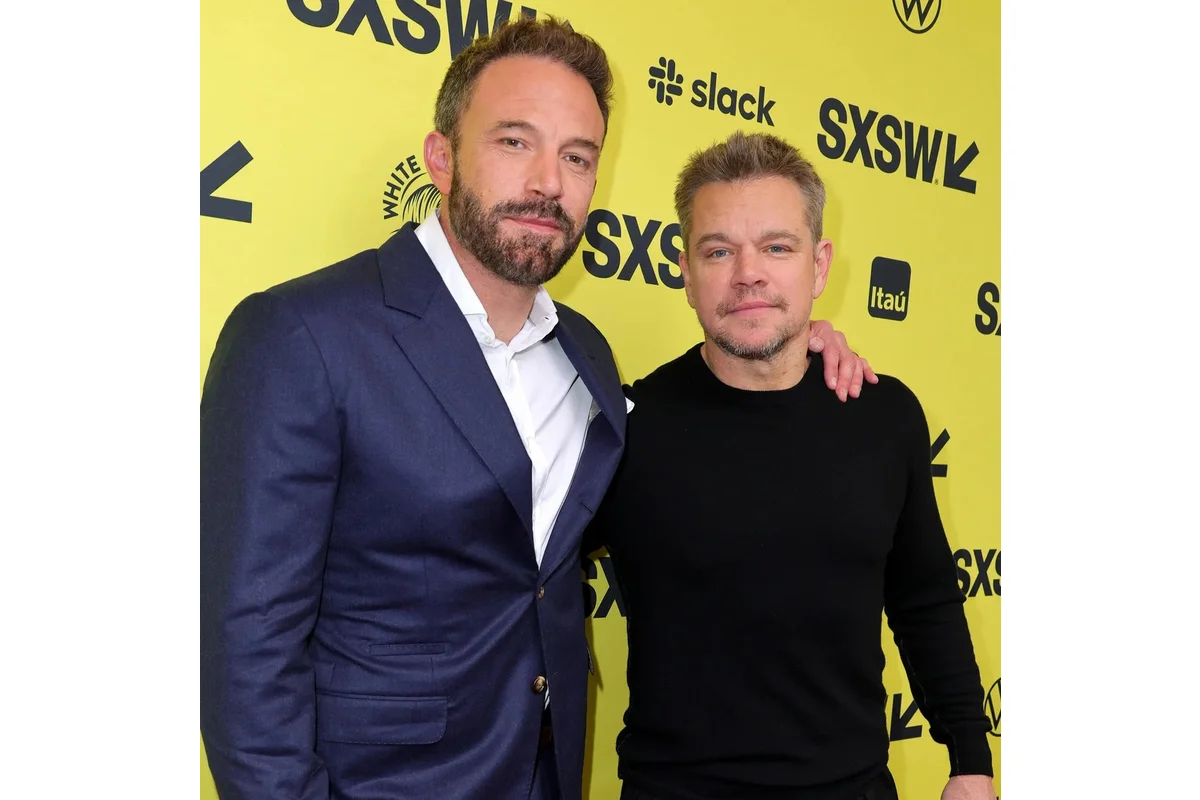
“It was like having an ex-wife right away—you just divide, divide, divide,”
a sentiment underlined by his own experiences with divorce from Jennifer Lopez.
“And that joke is in no way meant to reflect on anyone.”
– Ben Affleck, Actor
Matt Damon echoed Ben’s shock, saying,
“We were like, ‘We understand this guy gets half, but who else gets half? What’s happening?”
– Matt Damon, Actor
The duo splurged on new Jeep Grand Cherokees immediately after their windfall, an impulsive act Affleck later admitted led him to go broke in less than a year.
“I was broke in eight months,”
Affleck revealed.
“Me and him both bought new Jeep Grand Cherokees. Right away. First check, it was ‘When can I get my Jeep?’”
– Ben Affleck, Actor
Affleck comically admitted,
“I got the car before I got off the couch,”
since he was sleeping in Damon’s living room at the time. House hunting also required creative measures; without credit, they leveraged their “Good Will Hunting” fame to secure a rental.
“We had no credit, but they had run this story in Variety,”
Affleck said.
“It was like, ‘Hey, these two knuckleheads sell this script and they’re gonna be so good.’ So to get the lease, we had to go to the landlord and bring it. We were like, ‘We don’t have credit, but we have this.’”
– Ben Affleck, Actor
With hindsight, Affleck is neither proud nor regretful.
“I would do it the same f–king way.”
– Ben Affleck, Actor
Reality of Celebrity Paychecks: Struggles and Surprises
Ben Affleck’s struggles are not unique. Other celebrities, across genres and generations, have faced similar realities—meager payments, disproportionate taxes, and challenges with financial planning—that stand in stark contrast to the public perception of easy wealth in Hollywood.
Joe Giudice’s Breakout and Expenses
Joe Giudice, known for his spot on Real Housewives of New Jersey, recalls earning little from reality TV’s early seasons with ex-wife Teresa Giudice.
“We got paid nothing the first season,”
he told daughter Gia on her podcast.
“I’ll even say, it was like $25,000. It was ridiculous. But, whatever.”
– Joe Giudice, Reality Star
He also highlighted unexpected expenses, saying,
“I think the first year we had that big party in my great room, I think that show cost me $150,000 the first year.”
– Joe Giudice, Reality Star
Jenna Johnson on Dancing With the Stars Earnings
Dancer Jenna Johnson clarified the financial realities at “Dancing With the Stars,” noting that while there’s no million-dollar prize, there are bonuses for finalists.
“Whoever makes it to the finale, you all get paid up until then,”
she explained.
“And you do get a nice bonus.”
– Jenna Johnson, Dancer
However, she clarified that the reward is modest compared to public assumptions:
“It’s not like you get a million dollars. You’re just getting a cute trophy together.”
– Jenna Johnson, Dancer
“You’re guaranteed until a certain amount of weeks.”
– Jenna Johnson, Dancer
Jennifer Lawrence Exposes Pay Discrepancies in Hollywood
Jennifer Lawrence famously addressed the gender pay gap when differences between her and Leonardo DiCaprio‘s paychecks for the film “Don’t Look Up” came to light.
“Look, Leo brings in more box office than I do,”
she remarked to Vanity Fair.
“I’m extremely fortunate and happy with my deal. But in other situations, what I have seen—and I’m sure other women in the workforce have seen as well—is that it’s extremely uncomfortable to inquire about equal pay. And if you do question something that appears unequal, you’re told it’s not gender disparity but they can’t tell you what exactly it is.”
– Jennifer Lawrence, Actor
On another occasion, she said,
“I’m so fortunate to have my job. My problem is not money,”
when addressing pay disparities.
“I wasn’t upset that I only got this many millions for a movie. That’s ridiculous. I was angry about the unfairness and inequality.”
– Jennifer Lawrence, Actor
Jonah Hill’s Willingness to Work for Less
Jonah Hill, despite his star power, took home only $60,000 before taxes for “The Wolf of Wall Street,” a fraction of what Leonardo DiCaprio earned for the same film.
“They gave me the lowest amount of money possible,”
he told The Howard Stern Show, justifying his choice to work with director Martin Scorsese regardless of the pay.
“I would sell my house and give him all my money to work for [Scorsese],”
he explained.
“This isn’t what you make money for. You do 22 Jump Street or you do other things, and you can pay your rent. I would have done anything in the world. I would do it again in a second. This isn’t about money. You should do things that you care about.”
– Jonah Hill, Actor
Oprah Winfrey’s Perspective on Early Movie Pay
Oprah Winfrey reflected on a pivotal moment in her career when she accepted a modest salary for her role in “The Color Purple.”
“They were only offering $35,000 to be in this film, and it is the best $35,000 I ever earned,”
she said, crediting the experience for its impact rather than its pay.
“It changed everything and taught me so much.”
– Oprah Winfrey, Media Mogul
Jennifer Lopez Breaks Ground for Latina Actresses
When Jennifer Lopez starred as Selena Quintanilla, she made history as the first Latina actress to command a one-million-dollar paycheck, though she confessed to being naïve at the time.
“I was too young and didn’t know what the hell was going on,”
Lopez admitted.
“It was great they offered me a million dollars. I feel like everyone was making a statement.”
– Jennifer Lopez, Actor
Her dedication persists, as she noted,
“I do things because I love them. I didn’t get paid a whole bunch of money for Hustlers. I did it for free and produced it. I bank on myself, you know? Like Jenny From the Block—I do what I love.”
– Jennifer Lopez, Actor
Adrien Brody Chooses Passion Over Large Paychecks
Oscar winner Adrien Brody revealed that accepting less money for passionate projects can have consequences. While working on “The Brutalist,” Brody’s low pay became a running joke.
“I need a studio movie now, because I’ve poured it all into this,”
he commented, referencing his ongoing home renovations. – Adrien Brody, Actor
Pete Davidson and the Modest SNL Earnings
Pete Davidson drew laughs by referencing the relatively low pay he earned as a young new cast member on “Saturday Night Live.”
“Do you guys know what they pay us?”
he joked.
“It’s like three grand an episode, so I think I got dinner.”
– Pete Davidson, Comedian/Actor
That financial reality persists across generations, illustrating how even iconic shows can start celebrities out with humble checks.
Kenan Thompson Remembers His First Big Check
Kenan Thompson, now a long-running “SNL” cast member, looked back to when he was a pre-teen actor on Nickelodeon.
“That first commercial when they paid me, it was $800,”
Thompson recalled.
“I was 12 so that may as well have been a million dollars.”
– Kenan Thompson, Actor
Lauren Graham on Streaming Residuals
“Gilmore Girls” star Lauren Graham addressed the challenges of monetizing beloved shows on streaming platforms.
“There really are no residuals on Netflix,”
she told Jimmy Kimmel, adding,
“But I’ve been paid in love and appreciation.”
– Lauren Graham, Actor
Tommy Dorfman’s ’13 Reasons Why’ Payouts and Strike Calls
Tommy Dorfman’s disclosure of her small paycheck for “13 Reasons Why” illuminated the financial realities for streaming actors and inspired calls to action during the 2023 SAG-AFTRA strike.
“My earnings for the entire first season of 13 reasons why were $29,953.24 prior to agency and manager fees (20%) and taxes,”
she shared, describing the long hours and lack of added compensation despite massive streaming success. – Tommy Dorfman, Actor
She emphasized the show’s popularity and its lack of fair compensation:
“Within the first 28 days of release, the show’s season 1 garnered a total of 476 million view hours. this is why we strike.”
– Tommy Dorfman, Actor
Dax Shepard Reveals Pay Comparisons in Hollywood
Dax Shepard, reflecting on his time on “Parenthood,” admitted he avoided comparing salaries with colleagues to maintain good relationships.
“Every job I had ever had in my life prior to Parenthood, I made a point to find out what everyone was making,”
he said.
“I’d always figure it out—either a conversation where I get it out of them or I backchannel through an agent.”
– Dax Shepard, Actor
George Clooney Invests in His Own Projects
George Clooney showcased his dedication to passion projects by taking $1 for several roles in “Good Night, and Good Luck.”
“I got a dollar for writing the script,”
he said.
“I had to endorse my check for directing and turn in my acting salary. [Actor, cowriter and coproducer Grant Heslov] and I each made a buck for doing it.”
– George Clooney, Actor
Christian Bale’s ‘American Psycho’ Minimum Pay Experience
Christian Bale described earning the legal minimum for “American Psycho” because of initial studio reluctance.
“The absolute minimum they were legally allowed to pay me,”
he stated, highlighting the lack of faith from producers. Bale recalled being teased, even by his own makeup artists,
“because I was getting paid less than any of them.”
– Christian Bale, Actor
Jon Heder on Napoleon Dynamite’s Unexpected Success
“Napoleon Dynamite” star Jon Heder began with a microscopic salary for his breakout role, but after the film’s surprise box office performance, he successfully renegotiated for more.
“They went a little bit higher.”
– Jon Heder, Actor
Djimon Hounsou on Underappreciation in the Industry
Djimon Hounsou addressed systemic underpayment, despite decades in film and multiple Oscar nominations.
“I’ve been in this business and making films now over two decades,”
he told CNN.
“And still—with two Oscar nominations and been in many big blockbuster films—and yet I’m still struggling financially to make a living.”
– Djimon Hounsou, Actor
Rebel Wilson’s Income Progress and the Price of Fame
Rebel Wilson described her challenging start with a $3,500 payment for “Bridesmaids,” all used to join the Screen Actors Guild.
“A fee that I then had to pay directly to the Screen Actors Guild to join the union. So really, I got paid nothing.”
– Rebel Wilson, Actor
Still, Wilson celebrated her growing success and income, providing a stark glimpse into the deductions from substantial Hollywood salaries. She wrote that while “Pitch Perfect 3” paid her $10 million, taxes, agent and lawyer fees, and managerial expenses claimed nearly all of it, yet she still felt fortunate to net a significant fortune.
“Lost almost 50 percent to taxes, 10 percent to agents and 5 percent”
– Rebel Wilson, Actor
“Netted what to me was an absolute fortune.”
– Rebel Wilson, Actor
Ellen Pompeo’s Hard-Fought Battle for Pay Parity
Ellen Pompeo, the headline star of “Grey’s Anatomy,” finally secured a high-paying contract after many seasons.
“I’m 48 now, so I’ve finally gotten to the place where I’m OK asking for what I deserve, which is something that comes only with age,”
Pompeo declared.
“Because I’m not the most ‘relevant’ actress out there. I know that’s the industry perception because I’ve been this character for 14 years. But the truth is, anybody can be good on a show season one and two. Can you be good 14 years later? Now, that’s a f–kin’ skill.”
– Ellen Pompeo, Actor
She later stated,
“Just being that I was the namesake of the show, I deserved the same and that was harder to get. I wasn’t salty about him getting what he got. I was salty that they didn’t value me as much as they valued him and they never will.”
– Ellen Pompeo, Actor
Jamie Lee Curtis and the Realities of a Movie Debut
Jamie Lee Curtis recalled her paltry earnings from her breakout role in “Halloween”:
“That was a lot at the time!”
said Nick Castle, who played Michael Myers.
“You have to remember: My interest in doing the film was being on set, so I could demystify the experience of filmmaking and directing. I expected to hang around the set for no money. But hey, $25 per day, and all I had to do was wear a rubber mask.”
– Nick Castle, Actor
Taraji P. Henson on Negotiation and Sacrifice
Taraji P. Henson described her disappointment with her $150,000 offer for
“The Curious Case of Benjamin Button,”
after producers rejected her initial request for $500,000.
“You don’t hear a lot of $20 million quotes anymore, but at this time that was happening,”
Henson explained.
“And rightfully so—I’m not saying they shouldn’t have paid Cate and Brad what they deserved.”
– Taraji P. Henson, Actor
She felt her own value was dismissed:
“I’m bringing a certain amount to the seat too and I felt like what I was asking at that time in my career was fair, was fair to the ticket sales that I would contribute to this big film. Wouldn’t do it.”
– Taraji P. Henson, Actor
She broke it down for listeners:
“I know people go, ‘$150,000, that’s a lot of money!’ I don’t ever want people to think that I’m ungrateful because that is not me.”
– Taraji P. Henson, Actor
However, the realities of taxes and representation left her with much less than expected:
“Uncle Sam is going to take 50 percent of that, so now you’re left with, what? $75,000. Now before Uncle Sam takes the money, I have to pay my team before taxes, 30 percent. So once Uncle Sam takes his 75, then I got another 30 that’s coming off of that 75, so I may have made $40,000?”
– Taraji P. Henson, Actor
Cate Blanchett and Orlando Bloom’s Rings of Low Pay
Cate Blanchett, who portrayed royal elf Galadriel in “The Lord of the Rings,” dismissed the notion that her most famous role brought her the biggest payday.
“No one got paid anything to do that movie…I mean, I basically got free sandwiches, and I got to keep my ears.”
– Cate Blanchett, Actor
Orlando Bloom, who played Legolas in the same trilogy, confirmed the limited compensation. He revealed he earned just $175,000 for all three films—a modest payout given the franchise’s multi-billion dollar box office returns.
The Broader Impact of Pay Transparency and Tax Realities in Hollywood
Ben Affleck’s experiences with taxes, impulsive spending, and the learning curve that followed are echoed again and again by his peers. Other key entities, including Jennifer Lopez, Jennifer Lawrence, Ellen Pompeo, Djimon Hounsou, and Rebel Wilson, have all spoken out about payment structures, tax struggles, and the need for transparency in an industry often known for its secrecy about compensation.
Celebrity stories from icons like Oprah Winfrey, adrien brody, George Clooney, and Taraji P. Henson remind both newcomers and veterans of the industry that fame does not always equate to riches, and that the Ben Affleck tax struggles narrative is just one of many sobering examples that can serve as a lesson for anyone coming into unexpected fortune. As changes continue to unfold in Hollywood—with calls for pay equity, union action, and honest conversation about money—the significance of these candid revelations will likely influence future generations of actors, writers, and producers to take greater care with their earnings and expectations.
