
Netflix co-CEO Ted Sarandos confronted accusations made by acclaimed director James Cameron concerning Netflix’s proposed acquisition of Warner Bros. Discovery (WBD). Speaking on The Claman Countdown this past Friday, Sarandos dismissed Cameron’s criticisms as part of a misleading campaign, directly addressing what he called a Paramount-led disinformation effort. This dispute unfolds amid Netflix’s intentions to acquire WBD’s assets, including HBO and HBO Max, announced in December 2023.
Cameron’s Concerns Over Theatrical Impact and Job Losses
James Cameron voiced his opposition to the deal in a letter addressed to Senator Mike Lee, chairman of the Senate Judiciary Subcommittee on Antitrust, Competition Policy, and Consumer Rights. Cameron contended that Netflix’s business model fundamentally conflicts with the interests of theatrical film production. He warned that the acquisition would trigger theater closures, reduce film output, shutter service providers like visual effects companies, and cause widespread job losses across the industry.
“Theaters will close. Fewer films will be made. Service providers such as VFX companies will go out of business. The job losses will spiral,”
James Cameron, Film Director
Sarandos Defends Netflix’s Commitment to Theatrical Releases
Responding to Cameron’s allegations, Ted Sarandos expressed surprise and disappointment over the director’s stance. He highlighted his personal engagement with Cameron, revealing a December meeting where Netflix’s plan for a 45-day exclusive theatrical window was detailed.
“I met with James personally in late December and laid out for him our 45-day commitment to the theatrical exhibition of films and to the Warner Brothers slate,”
Ted Sarandos, Netflix Co-CEO
“I have talked about that commitment in the press countless times. I swore under oath in front of the Senate subcommittee on antitrust that that’s what we were doing.”
Ted Sarandos, Netflix Co-CEO
Sarandos emphasized that Netflix’s theatrical exclusivity period has consistently been 45 days, rejecting claims relating to a shorter 17-day window promoted by critics.
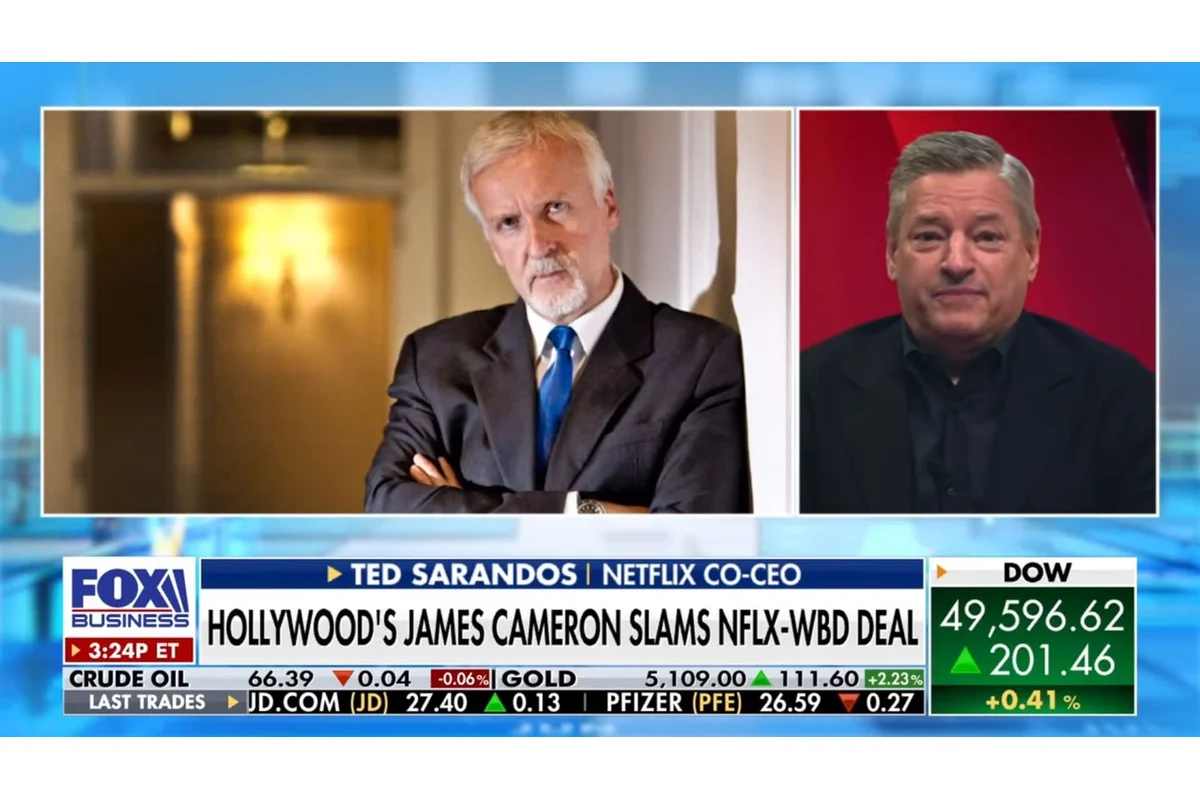
“45 days of theatrical exclusivity – that has been clear from the beginning,”
Ted Sarandos, Netflix Co-CEO
“I have never even uttered the word 17-day window.”
Ted Sarandos, Netflix Co-CEO
Netflix Vows Stability for Warner Bros. Film Production
Addressing fears that Netflix would reduce Warner Bros.’ theatrical film output, Sarandos reaffirmed the company’s intent to maintain the studio’s current operations. He assured that Warner Bros. would continue producing a vigorous and diverse slate of movies, each enjoying a full 45-day window in theaters.
“We will keep the Warner Brothers film and television studio running largely as it is today,”
Ted Sarandos, Netflix Co-CEO
“Movies going to the theaters for 45 days, a healthy, robust slate of films every year. That is gonna continue.”
Ted Sarandos, Netflix Co-CEO
Criticism of Paramount’s Rival Bid and Industry Impact
Sarandos criticized Paramount’s rival all-cash bid for WBD as detrimental to the entertainment sector. He accused Paramount of planning drastic job cuts and comparing their approach unfavorably to Netflix’s growth-focused strategy.
“The Paramount deal that’s floating around there and all the misinformation swirling around it is guaranteeing to cut jobs,”
Ted Sarandos, Netflix Co-CEO
“They’re guaranteeing to continue to make gigantic cuts to the entertainment industry. And then the alternative, we’re growing, growing, and they are promising to cut, cut, cut.”
Ted Sarandos, Netflix Co-CEO
Industry Debate Highlights Tension Over Streaming’s Future
This ongoing dispute between Netflix and James Cameron underscores broader tensions within Hollywood and California leadership regarding the future of film distribution. While Cameron stresses the preservation of theatrical business and job security, Netflix pushes forward with its strategic acquisition plans, aiming to expand its influence across studios and streaming platforms. The outcome of this contest for Warner Bros. Discovery, watched closely by industry insiders and regulators, will likely shape the trajectory of theatrical releases and content production in the years ahead.
