Harvey Keitel Bio
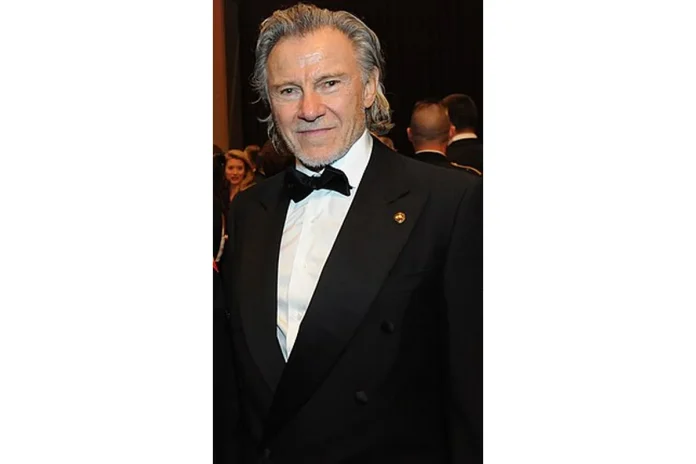
Harvey Keitel, born on May 13, 1939, in Brooklyn, New York City, is an American actor and film producer recognized for portraying morally complex and “tough guy” characters across more than five decades in film. He rose to prominence during the New Hollywood era and has built a long-running creative partnership with director Martin Scorsese, appearing in six of his films. Keitel is also widely associated with director Quentin Tarantino through his roles in Reservoir Dogs and Pulp Fiction. Over the course of his career, he has earned an Academy Award nomination and won an AACTA Award for Best Actor in a Leading Role.
Early Life and Background
Harvey Keitel was born in Brooklyn, New York City on May 13, 1939, the youngest child in a Jewish family. His mother, Miriam (née Klein; 1911–1987), had immigrated from Romania, and his father, Harry, from Poland. The family owned and operated a luncheonette, and his father also worked as a hat maker.
Keitel grew up in the Brighton Beach neighborhood of Brooklyn alongside his elder sister, Renee, and elder brother, Jerry. He attended Abraham Lincoln High School, where he spent his teenage years in a working-class environment that shaped his grounded sensibilities. At the age of 17, he enlisted in the U.S. Marines, an experience that added discipline and structure to his early adult life.
After his discharge from the Marines, Keitel worked as a court stenographer for roughly 10 to 12 years before deciding to pursue acting. During this period, his interest in performance grew, eventually leading him to formal acting training. He studied under renowned teachers Stella Adler and Lee Strasberg, and also trained at the HB Studio, where he honed his craft and developed the methods that would later define his screen presence.
Path to Acting
Keitel began his acting journey in the early 1960s, studying under Stella Adler and Lee Strasberg and training at the HB Studio. He initially found work in Off-Broadway productions, building a foundation in live performance and stagecraft. This period of training and small-scale theatrical work allowed him to develop a disciplined, immersive approach to character work that would later become a hallmark of his film performances.
Keitel’s transition to film began when he auditioned for a young filmmaker named Martin Scorsese. The audition resulted in a starring role as “J.R.” in Scorsese’s debut feature, Who’s That Knocking at My Door, released in 1967. The collaboration marked the start of one of the most enduring director-actor partnerships in American cinema, and it positioned Keitel at the forefront of the emerging New Hollywood movement.
Following this early success, Keitel took on supporting roles and independent projects, steadily building a reputation as a serious dramatic actor. His willingness to take on morally complex characters and his disciplined preparation earned him the respect of peers and directors. These formative years in Off-Broadway theatre and independent film laid the groundwork for the major Hollywood roles that would soon follow.
Harvey Keitel Career
Early Career (1966–1976)
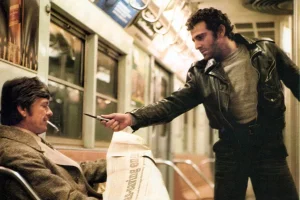
Harvey Keitel began his professional acting career in the mid-1960s, with his film debut in Martin Scorsese’s first feature, Who’s That Knocking at My Door, in 1967. He followed this with a starring role in Mean Streets (1973), which also served as the breakthrough film for Robert De Niro. These collaborations with Scorsese established Keitel as a defining presence in New Hollywood cinema.
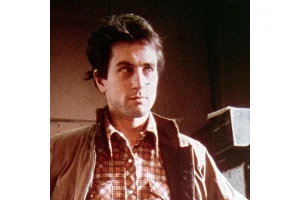
Throughout the early-to-mid 1970s, Keitel continued to take on challenging roles in notable films. He appeared in Alice Doesn’t Live Here Anymore (1974) and reunited with Robert De Niro for Taxi Driver (1976), playing the role of the pimp opposite Jodie Foster. During this same period, he portrayed Bugsy Siegel in the 1974 TV movie Virginia Hill, further demonstrating his range across formats. By the late 1970s, he had also starred in the directorial debuts of Paul Schrader (Blue Collar, 1978), Ridley Scott (The Duellists, 1977), and James Toback (Fingers, 1978).
Breakthrough (1977–1999)
The late 1970s and 1980s saw Keitel take on a string of memorable supporting roles, often playing hardened or morally ambiguous figures. He portrayed Judas in Martin Scorsese’s controversial The Last Temptation of Christ (1988) and appeared in films such as Falling in Love (1984), Wise Guys (1986), and the thriller Copkiller (1983). He also had a supporting role in The Two Jakes (1990), directed by Jack Nicholson, and played a sympathetic policeman in Thelma & Louise (1991) for Ridley Scott.
Keitel’s career reached new heights in the early 1990s. In 1991, he received an Academy Award nomination for Best Supporting Actor for his portrayal of mobster Mickey Cohen in Barry Levinson’s Bugsy. The following year, he starred in Quentin Tarantino’s directorial debut, Reservoir Dogs (1992), playing the iconic Mr. White, a role he also co-produced. This performance marked a turning point in his career, transforming his public image and opening the door to more varied roles. He also took on the demanding lead role in Bad Lieutenant (1992), playing a self-loathing, drug-addicted police officer seeking redemption.
Keitel continued his ascent with notable performances in Jane Campion’s The Piano (1993), for which he won the AACTA Award for Best Actor in a Leading Role, and as Winston “The Wolf” in Quentin Tarantino’s Pulp Fiction (1994). He went on to appear in Spike Lee’s Clockers (1995), From Dusk till Dawn (1996), and the crime drama Cop Land (1997) alongside Sylvester Stallone, Ray Liotta, and Robert De Niro. He also played a fatherly Satan in Little Nicky (2000) and an FBI agent in National Treasure (2004), demonstrating a remarkable range across genres.
Notable Works and Milestones
Harvey Keitel’s signature work includes his collaborations with Martin Scorsese, particularly Mean Streets (1973) and Taxi Driver (1976), as well as his defining performances as Mr. White in Reservoir Dogs (1992) and Winston Wolf in Pulp Fiction (1994). His Academy Award nomination for Bugsy (1991) and his AACTA Award win for The Piano (1993) stand as career milestones, alongside his dramatic turn in Bad Lieutenant (1992). In 2019, he reunited with Scorsese for The Irishman, appearing alongside Robert De Niro and Joe Pesci in what became one of the most celebrated gangster films of the decade.
Harvey Keitel Award Nominations
Harvey Keitel has received recognition from major awards bodies across his decades-long career. In 1991, he earned a nomination for the Academy Award for Best Supporting Actor for his portrayal of Mickey Cohen in the biographical crime drama Bugsy, directed by Barry Levinson. This nomination cemented his standing as one of the most respected character actors of his generation.
Harvey Keitel Awards Won
Harvey Keitel has won several prestigious awards throughout his career, including the AACTA Award for Best Actor in a Leading Role for his performance in Jane Campion’s The Piano in 1993. In 2002, at the 24th Moscow International Film Festival, he was honored with the Stanislavsky Award for his outstanding achievement in acting and his devotion to the principles of Stanislavsky’s school. In 2021, he received a Lifetime Achievement Award from the Newport Beach Film Festival.
Harvey Keitel Family
Harvey Keitel was the youngest child in a Jewish family, born to Miriam (née Klein; 1911–1987), a Romanian immigrant, and Harry, a Polish immigrant. He grew up in Brooklyn alongside his elder sister, Renee, and elder brother, Jerry. His parents owned and operated a luncheonette, and his father also worked as a hat maker.
Personal Life
Harvey Keitel was in a relationship with American actress Lorraine Bracco from 1982 to 1993, and together they have a daughter named Stella, born in 1985. He also has a son, Hudson, from a relationship with ceramic artist Lisa Marie Karmazin. In October 2001, Keitel married Israeli-Canadian actress Daphna Kastner in Jerusalem, after meeting her three weeks earlier at a Toronto film festival. Together, they have a son named Roman. In July 2017, Keitel was granted honorary citizenship of Maramureș County, Romania, in recognition of his family’s Romanian roots.