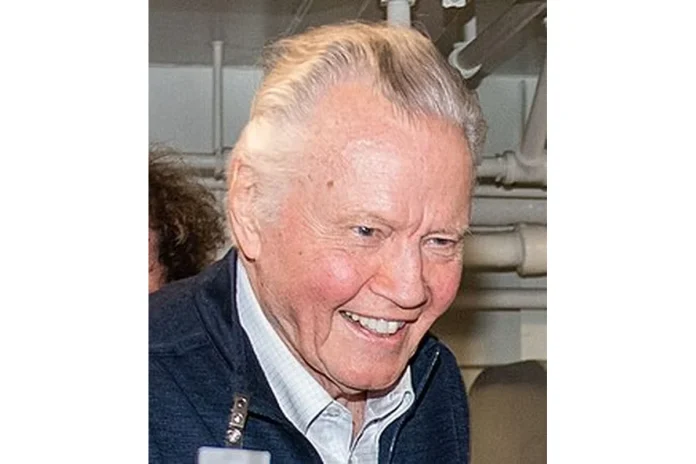
Jonathan Vincent Voight Bio
Jonathan Vincent Voight is an American actor whose career has spanned more than six decades and included some of the most memorable performances in modern cinema. Born on December 29, 1938, in Yonkers, New York, he rose to prominence in the late 1960s and cemented his place among Hollywood’s most respected actors with an Academy Award-winning performance in the 1978 film Coming Home. Over the years, Voight has appeared in more than one hundred film and television roles, working with directors such as John Boorman, Michael Mann, Francis Ford Coppola, and Hal Ashby. In 2019, he was awarded the National Medal of Arts in recognition of his contributions to American culture, and by January 2025 he had been named a Special Ambassador to Hollywood. His filmography has grossed more than $5.2 billion worldwide, and he remains one of the most prolific character actors in the industry.
Voight is known for his intense, emotionally raw performances that often anchor ensemble casts, and for his willingness to take on roles across every major genre, from crime dramas and war films to comedies and blockbuster action pictures. His portrayal of Joe Buck in Midnight Cowboy (1969) introduced a new kind of antihero to mainstream American cinema, while his performance as Luke Martin in Coming Home (1978) earned him the Academy Award for Best Actor. He has also received a British Academy Film Award, four Golden Globe Awards, and nominations for four Primetime Emmy Awards. Voight is the father of actress Angelina Jolie and actor James Haven, and he has been recognized for his outspoken views on American politics and culture in addition to his work on screen.
Early Life and Background
Jonathan Vincent Voight was born on December 29, 1938, in Yonkers, New York, to Barbara Kamp and Elmer Voight, a professional golfer. He has two brothers: Barry Voight, a former volcanologist at Pennsylvania State University, and James Wesley Voight, better known as Chip Taylor, the singer-songwriter who wrote the songs Wild Thing and Angel of the Morning. His paternal grandparents and his maternal great-grandparents were Slovak and German immigrants, respectively, and political activist Joseph P. Kamp was his great-uncle through his mother. Voight was raised as a Catholic, a faith that has remained meaningful to him throughout his life.
Voight attended Archbishop Stepinac High School, an all-boys Catholic school in White Plains, New York, where he first discovered a passion for acting and participated in school productions. After graduating in 1956, he enrolled at the Catholic University of America in Washington, D.C., where he majored in art and earned a Bachelor of Arts degree in 1960. Following graduation, he moved to New York City to pursue acting professionally and enrolled at the Neighborhood Playhouse School of the Theatre, where he studied under the legendary acting teacher Sanford Meisner. Meisner’s technique, which emphasized authentic emotional response and spontaneous action, would shape Voight’s approach to performance for the rest of his career.
Path to Actor
Voight launched his professional acting career in New York City’s theatre scene, making his off-Broadway debut in early 1961 in a revue called O Oysters. That same year, he made his Broadway debut as Rolf in the original production of The Sound of Music, where he met actress Lauri Peters, whom he later married. Through the early 1960s, he built a solid reputation as a stage actor, including a notable performance as Rodolfo in Arthur Miller’s A View from a Bridge in a January 1965 off-Broadway revival. At the same time, he found regular television work, appearing in episodes of Gunsmoke between 1963 and 1968, as well as guest roles on Naked City, The Defenders, Twelve O’Clock High, and Cimarron Strip.
His film debut came in 1967 with a role in Phillip Kaufman’s Fearless Frank, followed by a small part in Hour of the Gun later that year. In 1968, Voight appeared in Paul Williams’s Out of It, but it was his casting in Midnight Cowboy that transformed his career almost overnight. Directed by John Schlesinger and based on James Leo Herlihy’s novel, Midnight Cowboy told the story of Joe Buck, a naive male hustler from Texas navigating the harsh realities of New York City alongside a tubercular con artist named Ratso Rizzo, played by Dustin Hoffman. The film struck a powerful chord with both critics and audiences, becoming the only X-rated feature to win the Academy Award for Best Picture, and earning Voight his first Academy Award nomination for Best Actor.
Jonathan Vincent Voight Career
Early Career (1961–1969)
Voight’s first decade in the industry was defined by steady stage and television work that gradually built toward his film breakthrough. In 1968, he was cast as Joe Buck in Midnight Cowboy, a role that brought him his first Academy Award nomination for Best Actor. The film’s historic Academy Award for Best Picture win, alongside Dustin Hoffman’s win for Best Actor, established Voight as one of the most promising young actors of his generation and introduced him to an international audience.
Breakthrough (1970–1978)
Building on the momentum of Midnight Cowboy, Voight delivered a string of critically acclaimed performances throughout the early and mid-1970s. In 1972, he starred in John Boorman’s Deliverance, adapted from James Dickey’s novel of the same name, in which four men on a canoe trip in rural Georgia encounter violent hostility in a feral backwoods landscape. Voight’s performance, alongside co-stars Burt Reynolds and Ned Beatty, was widely praised by critics, and the film became one of the most talked-about releases of the decade. From 1973 to 1974, Voight appeared on Broadway in a revival of Tennessee Williams’s A Streetcar Named Desire, playing Stanley Kowalski at the Studio Arena Theater in Buffalo, New York.
He continued to build an impressive filmography with roles in The All American Boy (1973), Conrack (1974), and The Odessa File (1974), the latter of which pitted him against actor Maximilian Schell in a Cold War thriller set in Germany. In 1978, Voight took on the role of Luke Martin, a cynical and wounded Vietnam veteran, in Hal Ashby’s Coming Home. The performance earned him the Best Actor award at the Cannes Film Festival and, in 1979, the Academy Award for Best Actor in a Leading Role. Jane Fonda won the Academy Award for Best Actress for the same film, making Coming Home one of the most decorated films of that awards season.
Notable Works and Milestones
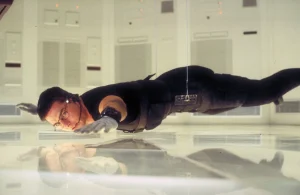
Voight’s signature performance came in Coming Home (1978), for which he won the Academy Award for Best Actor in 1979, cementing his status as one of the most talented actors of his generation. He also earned Academy Award nominations for Midnight Cowboy (1969), Runaway Train (1985), and Ali (2001), where his portrayal of sportscaster Howard Cosell — almost unrecognizable under makeup and a toupee — was hailed by critics as one of the finest supporting performances of the decade. Other landmark roles include Deliverance (1972), The Champ (1979), Heat (1995), Mission: Impossible (1996), Pearl Harbor (2001), the National Treasure film series, and his acclaimed television role as Mickey Donovan on Ray Donovan (2013–2020), which brought him renewed public attention and a Golden Globe Award for Best Supporting Actor in 2014.
Jonathan Vincent Voight Award Nominations
Throughout his career, Jonathan Vincent Voight has received four Academy Award nominations, four Primetime Emmy Award nominations, and a Screen Actors Guild Award nomination. His Academy Award nominations span more than three decades, reflecting the consistent quality of his performances from the counterculture era of the late 1960s through the early 2000s. For his role as Joe Buck in Midnight Cowboy (1969), he was nominated for Best Actor at the Academy Awards, losing to John Wayne for True Grit. He was nominated again for Best Actor for Runaway Train (1985) and for Best Actor in a Supporting Role for Ali (2001). On television, he earned Primetime Emmy nominations for his performance as Nazi officer Juergen Stroop in Uprising (2001) and for his role as Mickey Donovan on Ray Donovan (2014).
Jonathan Vincent Voight Awards Won
Jonathan Vincent Voight has won an Academy Award, a British Academy Film Award, and four Golden Globe Awards over the course of his career. He was awarded the National Medal of Arts in 2019 for his contributions to American performing arts. His most prominent award came in 1979, when he won the Academy Award for Best Actor for his role in Coming Home (1978). That same year, he also won the Golden Globe Award for Best Actor in a Motion Picture – Drama for the same role. In 1985, he won the Golden Globe Award for Best Actor in a Motion Picture – Drama for Runaway Train, and in 2014, he won the Golden Globe Award for Best Supporting Actor – Series, Miniseries or Television Film for his role as Mickey Donovan on Ray Donovan. He reprised that role in the 2022 film Ray Donovan: The Movie.
| Award | Wins | Year |
|---|---|---|
| Academy Award for Best Actor | 1 | 1979 |
| British Academy Film Award | 1 | 1979 |
| Golden Globe Award for Best Actor in a Motion Picture – Drama | 2 | 1979, 1985 |
| Golden Globe Award for Best Supporting Actor – Series, Miniseries or Television Film | 1 | 2014 |
| National Medal of Arts | 1 | 2019 |
Jonathan Vincent Voight Family
Jonathan Vincent Voight comes from a family with a notable presence in entertainment and academia. His father, Elmer Voight, was a professional golfer, and his mother, Barbara Kamp, was of German and Slovak descent. Voight has two brothers: Barry Voight, a former volcanologist at Pennsylvania State University, and James Wesley Voight, known professionally as Chip Taylor, who wrote the hit songs Wild Thing and Angel of the Morning. Political activist Joseph P. Kamp was Voight’s great-uncle through his mother.
Voight has two children from his marriage to actress Marcheline Bertrand: James Haven, born in 1973, who has worked as an actor and producer, and Angelina Jolie, born in 1975, who has become one of the most recognized actresses and filmmakers in the world. Through Angelina Jolie, Voight is a grandfather to six grandchildren. Voight has not remarried since his divorce from Bertrand in 1980.
Personal Life
Voight was married to actress Lauri Peters from 1962 to 1967, after meeting her during the original Broadway production of The Sound of Music. He married actress Marcheline Bertrand in 1971, and the couple had two children, James Haven and Angelina Jolie. They separated in 1976, filed for divorce in 1978, and the divorce was finalized in 1980. Voight has not remarried since. Over the years, he has been publicly linked to Linda Morand, Rebecca De Mornay, Eileen Davidson, Barbra Streisand, Nastassja Kinski, and Diana Ross. In 2019, Voight was awarded the National Medal of Arts and appointed to a six-year term on the Board of Trustees of the Kennedy Center in Washington, D.C. In January 2025, President-elect Donald Trump announced that Voight would serve as a Special Ambassador to Hollywood, sharing the role with Mel Gibson and Sylvester Stallone.