Sean Connery Bio
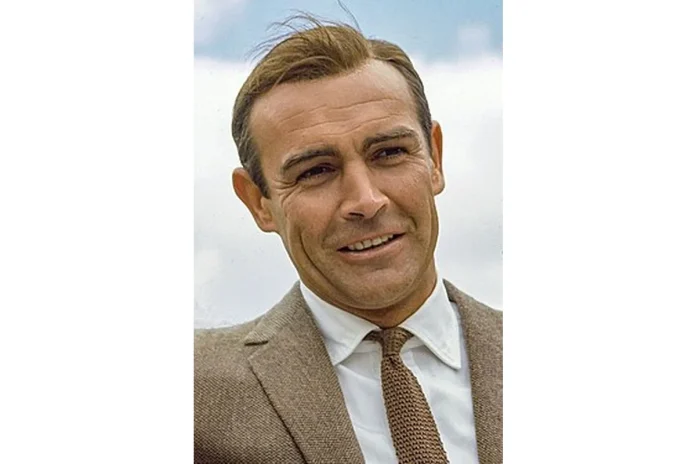
Sir Thomas Sean Connery (25 August 1930 – 31 October 2020) was a Scottish actor who became a global icon through his work in motion pictures. He was the first actor to portray the fictional British secret agent James Bond, starring in seven Bond films between 1962 and 1983. Beyond the Bond franchise, Connery built a distinguished career working with directors such as Alfred Hitchcock, Sidney Lumet, and John Huston, appearing in films including Marnie, The Hill, and The Man Who Would Be King. He received numerous accolades, including an Academy Award for Best Supporting Actor for The Untouchables (1987), and was knighted by Queen Elizabeth II in 2000 for his services to drama.
Early Life and Background
Thomas Sean Connery was born at the Royal Maternity Hospital in Edinburgh, Scotland, on 25 August 1930. He was named after his paternal grandfather and was of half-Irish and half-Scottish descent. His mother, Euphemia McBain McLean, was a cleaning woman, and his father, Joseph Connery, was a factory worker and lorry driver. Connery was raised at No. 176 Fountainbridge, a block in Edinburgh that has since been demolished. He had a younger brother named Neil and was generally referred to in his youth as Tommy.
Connery grew up quickly, reaching his full adult height of 6 feet 2 inches by the age of 18. He became known during his teen years as Big Tam. In 1946, at the age of 16, he joined the Royal Navy, where he acquired two tattoos reading Mum and Dad and Scotland Forever. He was discharged at 19 on medical grounds because of a duodenal ulcer. After his naval service, Connery worked a series of jobs in Edinburgh, including milkman, lorry driver, lifeguard, labourer, and artist’s model for the Edinburgh College of Art.
Connery began bodybuilding at the age of 18 and competed in the 1953 Mr. Universe contest. He was also a keen footballer, playing for Bonnyrigg Rose in his younger years and being offered a trial with East Fife. His early experiences in physical pursuits shaped his on-screen presence and helped him develop the confidence that would later define his acting career.
Path to Acting
Connery’s path to acting began in late 1951 when he helped out backstage at the King’s Theatre in Edinburgh. During a bodybuilding competition in 1953, he learned of auditions for a production of South Pacific and landed a small part as one of the Seabees chorus boys. By the time the production reached Edinburgh, he had been promoted to a featured role, and his salary was raised accordingly. The production returned the following year due to popular demand, and Connery continued to climb the ranks.
During the Christmas 1954 production of South Pacific at the Opera House in Manchester, Connery developed a serious interest in theatre through the American actor Robert Henderson. Henderson lent him works by Henrik Ibsen, Proust, Tolstoy, and Shakespeare, and urged him to take elocution lessons. This mentorship helped Connery secure parts at the Maida Vale Theatre in London and laid the foundation for his transition to professional acting.
Connery met his longtime friend Michael Caine at a party during the production of South Pacific in 1954. He had already begun appearing in films as an extra, including Herbert Wilcox’s 1954 musical Lilacs in the Spring alongside Errol Flynn and Anna Neagle. His early theatre work at the Oxford Playhouse, where he appeared in productions such as The Bacchae and Anna Christie, helped him hone his craft and prepare for the demands of film work.
Sean Connery Career
Early Career (1954–1963)
Connery’s early career included a string of small television and film roles throughout the late 1950s. In early 1957, he hired the agent Richard Hatton, who secured him his first film role as Spike, a minor gangster in Montgomery Tully’s No Road Back. He then played a rogue lorry driver in Cy Endfield’s Hell Drivers (1957) alongside Stanley Baker and Herbert Lom, and appeared in Terence Young’s Action of the Tiger opposite Van Johnson.
Connery gained wider recognition with a major role in the melodrama Another Time, Another Place (1958) opposite Lana Turner and Barry Sullivan. The following year, he landed a leading role in the Walt Disney Productions film Darby O’Gill and the Little People (1959) alongside Albert Sharpe and Janet Munro. These early roles established Connery as a rising talent in British and international cinema.
Breakthrough (1962–1983)
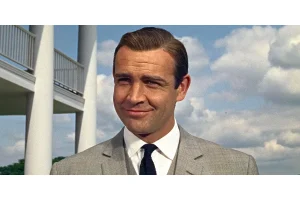
Connery’s breakthrough came in 1962 when he was cast as James Bond in Dr. No, the first film in the franchise. He went on to star in From Russia with Love (1963), Goldfinger (1964), Thunderball (1965), You Only Live Twice (1967), and Diamonds Are Forever (1971), becoming synonymous with the role. In 1972, he shared the Golden Globe Henrietta Award with Charles Bronson for World Film Favorite – Male.
While making the Bond films, Connery also starred in other notable projects, including Alfred Hitchcock’s Marnie (1964) opposite Tippi Hedren and Sidney Lumet’s The Hill (1965), which debuted at the Cannes Film Festival and won Best Screenplay. In 1975, he appeared in John Huston’s The Man Who Would Be King opposite Michael Caine, a film both actors later regarded as their favourite. He also played Robin Hood in Robin and Marian (1976) opposite Audrey Hepburn and appeared in ensemble films such as Murder on the Orient Express (1974) and A Bridge Too Far (1977).
Connery agreed to reprise Bond in Never Say Never Again (1983), a non-Eon-produced film. Although the film performed well at the box office, production problems and a broken wrist sustained during filming left Connery unhappy with the major studios. He did not make any films for two years following its release.
Breakthrough (1986–2003)
Following the successful European production The Name of the Rose (1986), for which he won a BAFTA Award for Best Actor, Connery’s interest in more commercial material was revived. That same year, a supporting role in Highlander showcased his ability to play older mentors to younger leads, a role that would recur in many of his later films.
In 1987, Connery starred in Brian De Palma’s The Untouchables, where he played a hard-nosed Irish-American cop alongside Kevin Costner’s Eliot Ness. For his performance, he received the Academy Award for Best Supporting Actor, the Golden Globe Award for Best Supporting Actor – Motion Picture, and a BAFTA nomination, making him the first Scottish actor to win a major Oscar. He also received the Cecil B. DeMille Award that year. In 1989, he starred in Steven Spielberg’s Indiana Jones and the Last Crusade as Henry Jones Sr., earning BAFTA and Golden Globe nominations.
Connery’s subsequent box-office hits included The Hunt for Red October (1990), The Rock (1996), and Entrapment (1999). In 1996, he voiced the role of Draco the dragon in Dragonheart. He received positive reviews for his performance in Finding Forrester (2000) and a Crystal Globe for outstanding artistic contribution to world cinema. His final on-screen role was as Allan Quatermain in The League of Extraordinary Gentlemen (2003), after which he retired from acting.
Notable Works and Milestones
Connery’s signature work remains his portrayal of James Bond, a role that defined a generation of action cinema. His Oscar-winning performance in The Untouchables and his BAFTA-winning turn in The Name of the Rose stand as career-defining moments. He was voted by People magazine as the Sexiest Man Alive in 1989 and the Sexiest Man of the Century in 1999, and was ranked eighth on Channel 4’s 100 Greatest Movie Stars list in 2003.
Sean Connery Award Nominations
Connery received numerous award nominations throughout his career, reflecting his range and longevity in the film industry. He earned BAFTA nominations for his performances in The Untouchables (1987) and Indiana Jones and the Last Crusade (1989), as well as Golden Globe nominations for the latter film. His work was also recognized by the American Film Institute, which honoured him with a Lifetime Achievement Award on 8 June 2006, the same occasion on which he confirmed his retirement from acting.
Sean Connery Awards Won
Connery’s career was marked by a series of major awards and honours. For his role in The Untouchables (1987), he received the Academy Award for Best Supporting Actor, the Golden Globe Award for Best Supporting Actor – Motion Picture, and the BAFTA Award for Best Actor for The Name of the Rose. He also received the Cecil B. DeMille Award in 1987, the BAFTA Fellowship in 1998, and the Kennedy Center Honors in 1999.
In 2000, Connery was knighted by Queen Elizabeth II at an investiture ceremony at Holyrood Palace in Edinburgh for his services to drama. He was also made a Commander of the Order of Arts and Letters in France and received a Crystal Globe for outstanding artistic contribution to world cinema. He shared the Golden Globe Henrietta Award with Charles Bronson for World Film Favorite – Male in 1972.
| Award | Wins | Year |
|---|---|---|
| Academy Award for Best Supporting Actor | 1 | 1988 |
| Golden Globe Award for Best Supporting Actor – Motion Picture | 1 | 1988 |
| BAFTA Award for Best Actor | 1 | 1987 |
| Cecil B. DeMille Award | 1 | 1987 |
| BAFTA Fellowship | 1 | 1998 |
| Kennedy Center Honors | 1 | 1999 |
| Knight Bachelor | 1 | 2000 |
Sean Connery Family
Connery was the son of Joseph Connery, a factory worker and lorry driver, and Euphemia McBain McLean, a cleaning woman. He had a younger brother, Neil Connery. Connery’s paternal great-grandparents emigrated to Scotland from Wexford, Ireland, in the mid-19th century, and his great-grandfather James Connery was an Irish Traveller. The remainder of his family was of Scottish descent.
Connery was married to the Australian actress Diane Cilento from 1962 to 1973, and they had a son, the actor Jason Connery. He later married the French-Moroccan painter Micheline Roquebrune in 1975, and the marriage lasted until his death. Connery’s father was a Roman Catholic, and his mother was a Protestant, and Connery himself was a lifelong supporter of Scottish football.
Personal Life
Connery relocated to the Bahamas in the 1990s and owned a mansion in Lyford Cay on New Providence. He was also awarded an honorary rank of Shodan (1st dan) in Kyokushin karate. He had a villa in Kranidi, Greece, where his neighbour was King Willem-Alexander of the Netherlands. Connery’s closest friendships in the film industry included Michael Caine, whom he met during the production of South Pacific in 1954.
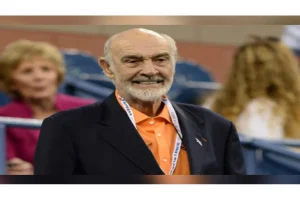
Connery died in his sleep on 31 October 2020, aged 90, at his home in the Lyford Cay community of Nassau in the Bahamas. His death was announced by his family and Eon Productions. A day later, his widow revealed he had dementia in his final years. His remains were cremated, and the ashes were scattered in Scotland at undisclosed locations in 2022.