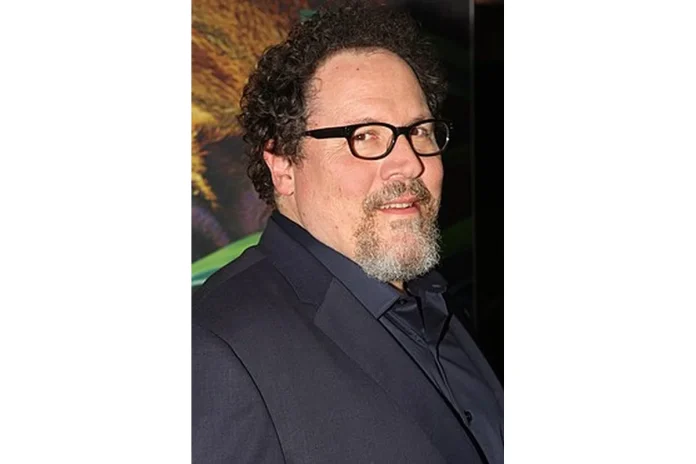
Jon Favreau Bio
Jonathan Kolia Favreau, known professionally as Jon Favreau, is an American actor and filmmaker born on October 19, 1966, in New York City, United States. He is widely recognized for directing major Hollywood productions, most notably the launch of the Marvel Cinematic Universe with Iron Man in 2008. Beyond directing, Favreau has built a reputation as a character actor in films such as Rudy, Swingers, and Chef, while also producing acclaimed television through his company Golem Creations. His work on the Star Wars franchise, including the Disney+ original series The Mandalorian, has further cemented his influence across both film and television.
Favreau’s career reflects a rare blend of on-screen talent and behind-the-scenes leadership, allowing him to move fluidly between acting, writing, directing, and producing. He is married to physician Joya Tillem, with whom he has three children, and he continues to be a leading creative force in the entertainment industry.
Early Life and Background
Jon Favreau was born in Flushing, Queens, New York, on October 19, 1966, the only child of Madeleine, an elementary school teacher, and Charles Favreau, a special education teacher. His mother passed away from leukemia in 1979, a loss that shaped his formative years. Favreau was raised in a household with mixed religious heritage; his mother was Ashkenazi Jewish, while his father is a Catholic of Italian and French-Canadian ancestry. Although he initially attended Hebrew school, he dropped out to pursue acting, though both sides of his family later ensured he had a bar mitzvah ceremony following his mother’s death.
Favreau attended The Bronx High School of Science, a specialized public high school for gifted students in New York, graduating in 1984. He then enrolled at Queens College, where he studied from 1984 to 1987 before briefly leaving. During this period, he earned the nickname Johnny Hack among friends because of his skill at the game Hacky Sack. He took a short-lived job at the investment firm Bear Stearns on Wall Street before returning to Queens College for a semester in early 1988. Ultimately, he dropped out of college a few credits short of completing his degree.
That summer, Favreau moved to Chicago to pursue a career in comedy, performing at several improvisational theaters, including the ImprovOlympic and the Improv Institute. These early experiences in live performance helped him develop the comedic timing and storytelling instincts that would later define his work in Hollywood.
Path to Celebrity
Favreau’s entry into the entertainment industry began in Chicago, where his improvisational work led to his first film role. He was cast as D-Bob, a tutor, in the 1993 sleeper hit Rudy, starring alongside Sean Astin. It was on the set of Rudy that Favreau met Vince Vaughn, who played a small role in the film and would become a frequent collaborator throughout his career. The following year, Favreau appeared in the college comedy PCU with Jeremy Piven and made a guest appearance on the television series Seinfeld in the episode titled The Fire.
Encouraged by these early opportunities, Favreau moved to Los Angeles, where he wrote and starred in the 1996 independent film Swingers. The film, which followed a group of young men navigating love and friendship in Los Angeles, became a cultural touchstone and marked Favreau’s breakthrough as both an actor and a screenwriter. The role of Mike Peters, a heartbroken New Yorker, resonated with audiences and helped launch Vaughn’s career as well, with his character Trent Walker serving as a memorable foil.
Throughout the late 1990s and early 2000s, Favreau continued to build his résumé with roles in Deep Impact, Very Bad Things, and The Replacements, while also appearing on television shows such as Friends, where he portrayed Monica Geller’s millionaire boyfriend Pete Becker. He also hosted and produced the IFC cable series Dinner for Five from 2001 to 2005, further establishing his presence in the entertainment world.
Jon Favreau Career
Early Career (1992-2000)
Jon Favreau’s earliest professional years were defined by a steady accumulation of acting credits in both film and television. His debut in Rudy introduced him to Hollywood and led to supporting roles in PCU and a guest spot on Seinfeld. The success of Swingers in 1996, which he co-wrote and starred in, established him as a distinctive voice in American comedy and opened doors to larger projects.
During this period, Favreau also diversified his television appearances, including a recurring role on Friends and guest spots on shows such as Tracey Takes On… and The Sopranos. His performance as Gus Partenza in the 1998 science fiction drama Deep Impact and his turn as Daniel Bateman in the 2000 comedy The Replacements demonstrated his range as a character actor, capable of handling both dramatic and comedic material.
Breakthrough (2001-2015)
Favreau made his directorial debut in 2001 with Made, a comedy he also wrote and starred in alongside Vince Vaughn. The film marked the beginning of his transition from actor to filmmaker. In 2003, he achieved his first major commercial success as a director with Elf, a holiday comedy starring Will Ferrell that became a perennial favorite. That same year, he appeared in the superhero film Daredevil as lawyer Foggy Nelson, a role he would reprise in later Marvel productions.
The true turning point of Favreau’s career came in 2008 when he directed Iron Man, the first film released under the Marvel Cinematic Universe banner. The film was both a critical and commercial triumph, launching one of the most successful film franchises in history. Favreau not only directed the film but also appeared as Happy Hogan, Tony Stark’s driver, a role he has continued to play in subsequent MCU films. He directed and produced the sequel, Iron Man 2, in 2010, and served as an executive producer on later entries in the series.
Beyond the MCU, Favreau wrote, directed, produced, and starred in the 2014 independent film Chef, a personal project inspired by his love of cooking and fatherhood. The film was widely praised by critics and demonstrated his ability to return to smaller-scale storytelling after years of blockbuster work.
Notable Works and Milestones
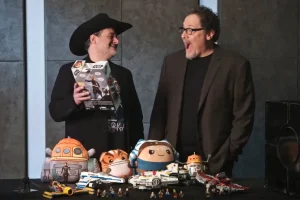
Among Favreau’s most significant works are Iron Man, which was selected for preservation in the United States National Film Registry in 2022, and The Jungle Book, a 2016 live-action adaptation that became one of the highest-grossing films of that year. His 2019 photorealistic remake of The Lion King surpassed The Jungle Book to become his highest-grossing film as a director. In television, he created and executive produced The Mandalorian for Disney+, a series that has become a flagship program for the streaming service and has expanded into multiple spin-offs, including The Book of Boba Fett, Ahsoka, and Skeleton Crew.
Jon Favreau Award Nominations
Information regarding specific award nominations across Jon Favreau’s career is not fully detailed in the available verified sources, and as a result, a comprehensive summary of nominations cannot be provided with certainty.
Jon Favreau Awards Won
Jon Favreau has received several notable honors in recognition of his contributions to the entertainment industry. In 2019, he was named a Disney Legend at the D23 Expo, an award given to individuals who have made an extraordinary impact on The Walt Disney Company’s legacy. In 2023, he received the 2,746th star on the Hollywood Walk of Fame, honoring his achievements in film and television.
Jon Favreau Family
Jon Favreau was born to Madeleine and Charles Favreau. His mother was an elementary school teacher, and his father was a special education teacher. Madeleine passed away from leukemia in 1979 when Favreau was a teenager. He grew up as an only child in a household with mixed Jewish and Catholic heritage, and he had a bar mitzvah ceremony following his mother’s death.
Personal Life
Jon Favreau married Joya Tillem, a physician, on November 24, 2000. Tillem is the niece of lawyer and talk show host Len Tillem. The couple has three children: a son and two daughters. Favreau has spoken publicly about the influence of the role-playing game Dungeons & Dragons on his creative development, citing it as a foundation for his skills in imagination, storytelling, and tone. He has also contributed a chapter to Tim Ferriss’ book Tools of Titans, sharing advice drawn from his varied career in entertainment.