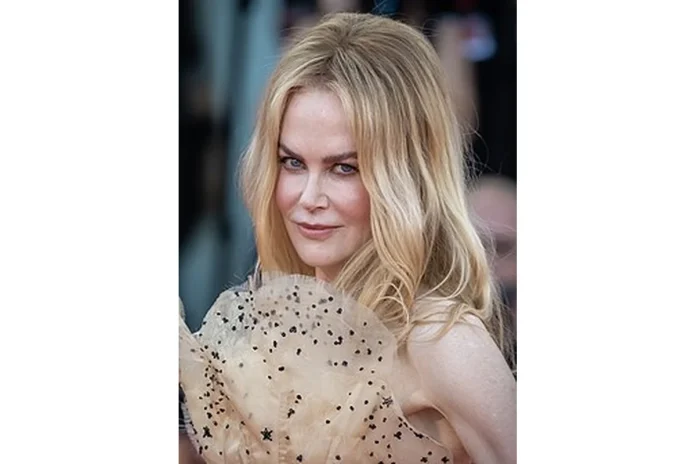
Nicole Kidman Bio
Nicole Mary Kidman (born 20 June 1967) is an Australian and American actress and producer. Known for her work across many genres in film and television, she has consistently ranked among the world’s highest-paid actresses since the late 1990s. Her accolades include an Academy Award, a British Academy Film Award, six Golden Globe Awards, and a Volpi Cup for Best Actress. She has also been honored with a star on the Hollywood Walk of Fame and the AFI Life Achievement Award.
Early Life and Background
Nicole Mary Kidman was born on 20 June 1967 in Honolulu, Hawaii, while her Australian parents were temporarily in the United States on student visas. Her mother, Janelle Ann Kidman, is a nursing instructor, and her father, Antony Kidman, was a biochemist, clinical psychologist, and author. She has a younger sister, Antonia, who works as a journalist and television presenter. Having been born in the United States to Australian parents, Kidman holds dual Australian and American citizenship, and has English, Irish, and Scottish ancestry.
After spending her earliest years in the United States during the Vietnam War, Kidman’s family returned to Australia when she was three years old. She grew up in the Longueville suburb of Sydney and attended Lane Cove Public School and North Sydney Girls High School. As a child, she was enrolled in ballet at the age of three and showed a natural talent for acting throughout her primary and high school years. Her interest in acting was sparked after watching Margaret Hamilton’s portrayal of the Wicked Witch of the West in The Wizard of Oz.
During her teenage years, Kidman attended the Phillip Street Theatre alongside fellow actress Naomi Watts, and studied at the Australian Theatre for Young People, where she took up drama and mime. Finding acting to be a refuge, she was encouraged by instructors to pursue the craft full-time, and eventually dropped out of high school to do so.
Path to Acting
Kidman began her professional acting career in Australia in 1983, appearing in the films Bush Christmas and BMX Bandits. Her early training in ballet, drama, and mime at local theatre programs provided a strong foundation for her on-screen work. She quickly secured small roles in Australian television productions and films throughout the mid-1980s, building a reputation for her commitment and versatility.
Her breakthrough came with lead roles in the thriller Dead Calm and the miniseries Bangkok Hilton, both released in 1989. These performances drew international attention and led to her casting opposite Tom Cruise in Days of Thunder (1990), marking her transition to Hollywood. She followed this with leading roles in Far and Away (1992), To Die For (1995), Batman Forever (1995), Practical Magic (1998), and Eyes Wide Shut (1999), establishing her as a global film star.
Nicole Kidman Career
Early Career (1983-1999)
Kidman’s early career began in 1983 with appearances in Bush Christmas and BMX Bandits, two Australian productions that introduced her to the industry. Throughout the mid-1980s, she built her resume with roles in Australian television and film, gradually gaining recognition for her screen presence and dramatic skill.
Her first major wave of acclaim arrived in 1989 with lead roles in Dead Calm and Bangkok Hilton, which paved the way for her move to Hollywood. Following her international debut in Days of Thunder (1990), Kidman went on to star in Far and Away (1992), To Die For (1995), Batman Forever (1995), Practical Magic (1998), and Eyes Wide Shut (1999). To Die For earned her a Golden Globe Award for Best Actress in a Motion Picture – Musical or Comedy.
Breakthrough (2001-2010)
The early 2000s marked Kidman’s most celebrated period as a leading actress. In 2001, she earned consecutive Academy Award nominations for her roles in Moulin Rouge! and The Hours, winning the Academy Award for Best Actress and the Golden Globe for Best Actress in a Motion Picture – Drama for her portrayal of author Virginia Woolf in The Hours. That same year, she starred in the critically acclaimed horror film The Others (2001), which became an international success.
Throughout the decade, she balanced box office hits with prestige projects, starring in Cold Mountain (2003), The Stepford Wives (2004), The Interpreter (2005), Happy Feet (2006), The Golden Compass (2007), and Australia (2008). She also earned an Academy Award nomination for her role in Rabbit Hole (2010). In 2003, she received a star on the Hollywood Walk of Fame in recognition of her contributions to the motion picture industry.
In 2003, Kidman also began her long-running association with Chanel No. 5 as the face of the fragrance. During this period, she was consistently ranked among the world’s highest-paid actresses and was named to Time magazine’s list of the 100 most influential people in the world in 2004.
Notable Works and Milestones
Among Kidman’s most notable works are Moulin Rouge! (2001), The Hours (2002), Cold Mountain (2003), Australia (2008), Rabbit Hole (2010), Lion (2016), and Aquaman (2018). She won the Academy Award for Best Actress for The Hours and a Volpi Cup for Best Actress for Babygirl (2024). She also received a Primetime Emmy Award for Outstanding Lead Actress in a Limited Series or Movie for Big Little Lies (2017-2019).
Nicole Kidman Award Nominations
Throughout her career spanning nearly four decades, Nicole Kidman has received numerous award nominations recognizing her work across film, television, and stage. These include four additional Academy Award nominations beyond her Best Actress win, five British Academy Film Award nominations, two Laurence Olivier Award nominations, three Primetime Emmy Award nominations, fifteen Screen Actors Guild Award nominations, fifteen Critics’ Choice Award nominations, and seventeen Golden Globe Award nominations, among many others. Her consistent recognition from major industry bodies reflects her standing as one of the most acclaimed performers of her generation.
Nicole Kidman Awards Won
Nicole Kidman has earned a wide array of major awards throughout her career. In 2003, she won the Academy Award for Best Actress and the Golden Globe for Best Actress in a Motion Picture – Drama, both for her portrayal of Virginia Woolf in The Hours. She has also won a British Academy Film Award, a Volpi Cup for Best Actress for Babygirl (2024), and two Primetime Emmy Awards for Big Little Lies (2017-2019), along with a Golden Globe for Best Actress in a Television Series – Drama for the same series.
Her Golden Globe tally includes a win for Best Actress in a Motion Picture – Musical or Comedy for To Die For (1995), and she has received a total of six Golden Globe Awards. She was also appointed Companion of the Order of Australia in 2006, received a star on the Hollywood Walk of Fame in 2003, and was honored with the AFI Life Achievement Award in 2024, becoming the first Australian actor to receive the award.
| Award | Wins | Year |
|---|---|---|
| Academy Award for Best Actress | 1 | 2003 |
| Golden Globe Award for Best Actress in a Motion Picture – Drama | 1 | 2003 |
Nicole Kidman Family
Nicole Kidman’s parents are Antony Kidman, a biochemist, clinical psychologist, and author, and Janelle Ann Kidman, a nursing instructor. Her younger sister, Antonia Kidman, is a journalist and television presenter. Kidman was raised in a Catholic family and grew up in the Longueville suburb of Sydney, Australia, after her family returned there from the United States when she was three years old. Her father, Antony Kidman, died in 2014.
Personal Life
Nicole Kidman married actor Tom Cruise on Christmas Eve 1990, after meeting on the set of Days of Thunder in 1989. The couple separated in 2001 and divorced later that year. During their marriage, they adopted two children. Kidman began dating Australian-American country singer Keith Urban in 2005, and they married on 25 June 2006 in Sydney. The couple have two daughters: Sunday Rose, born in 2008 in Nashville, and Faith Margaret, born in 2010 via gestational surrogacy. In September 2025, it was reported that Kidman and Urban had separated, with Kidman filing for divorce citing irreconcilable differences.